
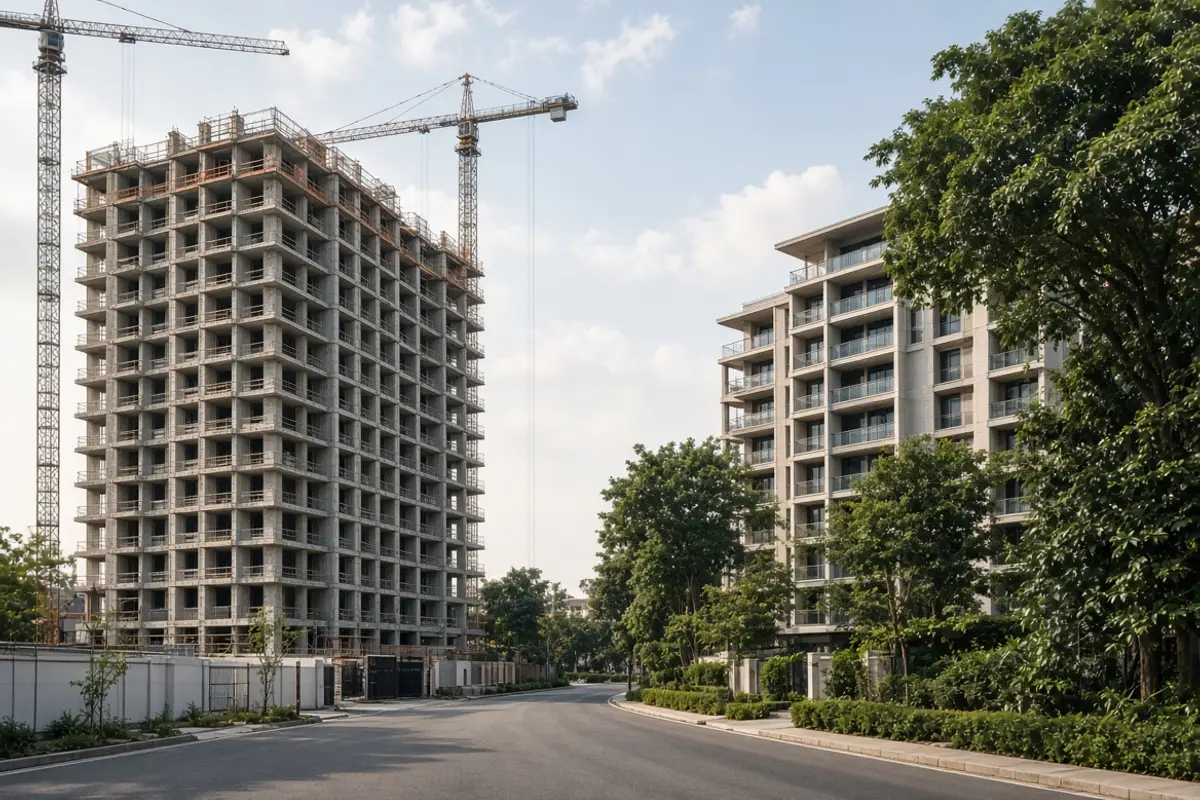
Key takeaways
- Strata new launches must be handed over within 36 months of the booking fee, or the developer pays 10% a year in LAD.
- For a subsale, banks lend on the lower of price and valuation, so a low valuation means more cash from you.
- New homes come with a 24-month defect liability period; a subsale is bought as it stands.
- A subsale usually completes in about three to four months from signing; a new launch can take three years or more.
The 36-month handover deadline for a new condo starts counting on the day you pay the booking fee, not the day you sign the SPA. A subsale next door, by contrast, usually completes in about three to four months from signing. Which clock suits you?
Say you are torn between a new launch with a glossy sales gallery and early-bird rebates, and a finished subsale you could walk into today. Both can be good buys. This guide compares them on price, timeline, financing, legal protection and risk, so you can match the choice to how soon you need the keys, how much cash you have and how much uncertainty you can live with.
You will also find practical tips for foreign and local buyers near the end.
What is the difference between a new launch and a subsale?
On a property portal, both are just a condo for sale. Behind the listing, they work very differently.
A new launch is bought from the developer, usually before or during construction. You sign a Sale and Purchase Agreement (SPA) with the developer, pay in stages as the building goes up and get the keys at handover.
A subsale (also called a resale) is a completed home bought from its current owner. You can inspect the actual unit, the common areas and the management accounts before you commit. The trade-off is that you are buying a property with a history, so the title, outstanding charges and condition all need checking.
How does the law protect new launch buyers?
Worried the developer will keep you waiting? The rules set clear deadlines.
Developers are regulated under the Housing Development (Control and Licensing) Act 1966, and their SPAs must follow standard forms. For strata homes such as condos, the Schedule H form gives the developer 36 months to hand over vacant possession; landed homes under Schedule G get 24 months.
In 2021 the Federal Court ruled that this period runs from the date you paid the booking fee, not the SPA date. If the developer is late, you can claim liquidated ascertained damages (LAD) at 10% a year of the purchase price, counted day by day.
After handover, the developer must repair defects you report in writing during the 24-month defect liability period, within 30 days of your notice. A subsale has no such cover: you buy the unit as it stands, so inspect it carefully before you sign.
Where does the money really differ?
New launches often look cheaper on paper. Developers price early phases keenly and add incentives such as free legal fees on the SPA and loan, or rebates. The saving can be real, but you are committing to a unit you cannot inspect.
With a new launch, the bank releases your loan in stages as construction progresses, so you pay interest only on the amount drawn. That eases your cash flow during the build, but you may be paying rent or another mortgage at the same time.
Subsale prices are set by the market. A motivated seller may accept less than the original launch price, while a popular building may sell above it. You can negotiate, and you can compare recent transacted prices in the same building before you make an offer.
The financing catch is valuation. For a subsale, the bank lends a percentage of the lower of the purchase price and its own valuation. If the valuation comes in below the agreed price, you pay the gap in cash.
What it looks like in real numbers
Say you agree to buy a RM600,000 subsale condo and your bank offers a 90% loan. These figures are an illustration:
- If the bank values it at RM600,000: the loan is RM540,000 and you pay RM60,000 in cash.
- If the bank values it at RM570,000: the loan is RM513,000 (90% of RM570,000) and you pay RM87,000 in cash.
That RM30,000 gap in valuation costs you RM27,000 more in cash. Stamp duty on the transfer is RM12,000 either way under the standard tiers (1% of the first RM100,000, 2% of the next RM400,000 and 3% of the last RM100,000).
Local buyers: say you are a Malaysian first-time buyer and the home costs RM480,000 instead, whether new or subsale. For SPAs signed up to 31 December 2027, homes up to RM500,000 are fully exempt from stamp duty on the transfer and loan. Without the exemption, transfer duty alone would be RM8,600 (RM1,000 + RM7,600).
Budget 2027, tabled on 9 October 2026, proposes to go further: for SPAs signed from 2027 to 2030, first homes up to RM750,000 would get full relief on the first RM500,000 and 50% relief on the rest. Until it becomes law, treat it as a proposal.
Foreign buyers: the tiered duty and the first-home exemption above are written for Malaysian buyers. From 1 January 2026, foreigners pay a flat 8% stamp duty on transfers (Finance Act 2025), and permanent residents are excluded.
Which risks come with each option?
Neither option is risk-free, so weigh these before you commit.
New launch risks:
- You only see a show unit, not your finished home.
- Handover can be late, and LAD only partly makes up for the wait.
- Shops, schools and roads around a new project may take years to arrive.
- You commit before the market has tested the unit's value.
Subsale risks:
- The bank's valuation may fall below the agreed price.
- Older buildings may need renovation or carry higher maintenance fees.
- Title, lease expiry and any unpaid maintenance or quit rent must be checked before signing.
- There is no developer defect cover, so hidden problems become your cost.
How do you decide?
Answer these six questions honestly.
- Need to move in within a year? Choose a subsale.
- Happy to wait three years or more? A new launch may fit.
- Short of cash for a large lump sum? Staged payments and developer incentives can help.
- Want certainty about the building and neighbours? Only a completed subsale gives you that.
- Could you cover a valuation shortfall? If not, get the bank's valuation before you commit to a subsale price.
- Buying to rent out? A subsale can earn rent within months; a new launch earns nothing until handover.
Foreign buyers: the Kuala Lumpur minimum price for foreigners is RM1 million, and purchases by foreigners need state consent, which makes a subsale take longer.
What are the best tips for choosing between a new launch and a subsale?
Use these tips to turn the comparison above into a choice you can act on.
- 1Compare price per sq ft, not the headline price. Check it against recent transactions in the same area, whether the home is new or subsale.
- 2Put a price on the incentives. Free legal fees or rebates can be a real saving on a new launch, but you commit to a unit you cannot inspect.
- 3Budget for the overlap during a build. The loan is drawn in stages, so you pay interest only on the amount drawn, but you may also be paying rent or another mortgage.
- 4See the area as it is today. Shops, schools and roads around a new project may take years to arrive, so check what is there now before you buy.
- 5Inspect a subsale before you sign. There is no developer defect cover, so check the unit, common areas and management accounts, plus title, lease expiry and any unpaid maintenance or quit rent.
- 6Foreign buyers: check the minimum and the timeline. The Kuala Lumpur minimum for foreigners is RM1 million, and state consent makes a subsale take longer.
- 7Local buyers: check the stamp duty cut-offs. The first-home exemption covers homes up to RM500,000 for SPAs signed up to 31 December 2027. Budget 2027's extension is still only a proposal.
Bottom line
A new launch rewards patience and trust in the developer, with legal protection on delivery and defects. A subsale rewards buyers who want to see before they pay, as long as the valuation and paperwork check out.
A sensible next step is to write down your move-in date and the cash you can put in, then compare one new launch and one subsale in the same area on total cost.
Frequently asked questions
Is it cheaper to buy a new launch or a subsale?
New launches often have a lower entry price plus incentives such as free legal fees, while subsale prices depend on the market and can be negotiated. Compare price per sq ft against recent transactions in the same area, not the headline price.
How long does a subsale purchase take in Malaysia?
Usually three to four months from signing the SPA. Subsale agreements commonly give the buyer three months to pay the balance, plus a one-month extension if you pay late interest. Deals needing state consent, such as purchases by foreigners, take longer.
How much deposit do I pay for a subsale?
Usually 10% in total: an earnest deposit of about 2% to 3% when your offer is accepted, then the balance of the 10% when you sign the SPA. The rest is paid by your loan and your own cash at completion.
Can I get a 90% loan for a subsale?
Many banks offer up to 90% on a first or second home, but the percentage applies to the lower of the price and the bank's valuation. From your third outstanding housing loan, Bank Negara caps financing at 70%.
What are your top tips for choosing between a new launch and a subsale?
Match the choice to your move-in date, compare price per sq ft with recent transactions, and keep cash ready in case a subsale valuation comes in low. Foreign buyers should check the RM1 million Kuala Lumpur minimum and allow for state consent. Malaysian first-time buyers should check the stamp duty cut-offs.